Product Strategy: The "Business Thinking"
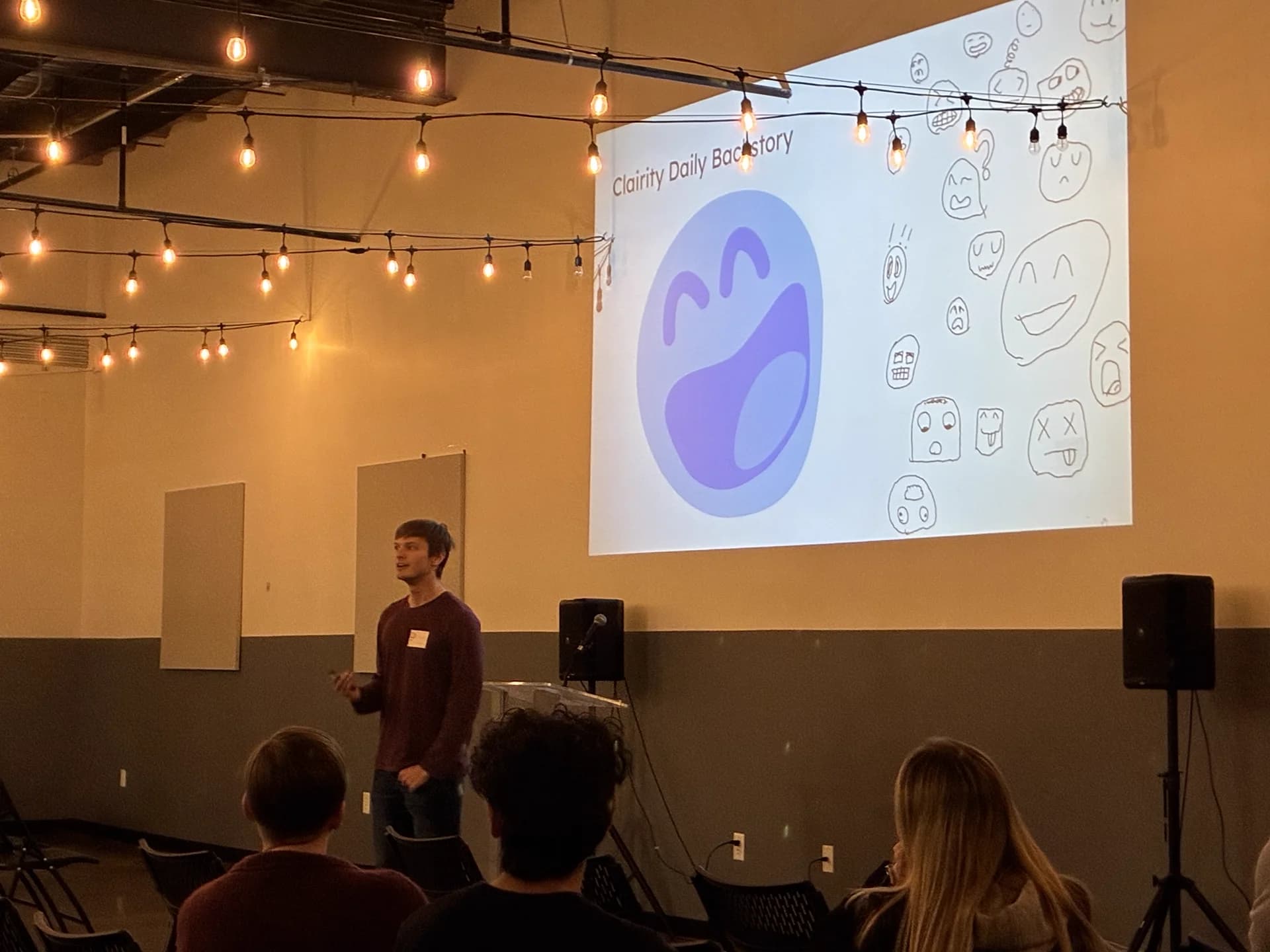
I didn't leave the corporate world to settle for another 9-to-5. After my time at Corteva, I realized I was craving more than just a paycheck—I wanted to work with passionate builders who are obsessed with solving real problems. I saw a massive disconnect in how people use AI: most were just "prompting," while a select few were "thinking" natively in AI.
I set out to close that gap. My mission wasn't just to build an app; it was to empower people to live happier, healthier, more fulfilling lives by mastering the tools of the future.
To do that, I had to walk the walk. I spent 70 days in a self-imposed "AI Bootcamp," testing one question: Do I have what it takes to build entire full-stack apps on my own? I wasn't just building a product; I was designing a career path defined by action, velocity, and impact.
The Problem
I saw two barriers holding people back:
-
The "User" Trap: Most people are passive consumers of AI. They ask a question and accept the answer. I wanted to turn them into active engineers of their own tools, teaching them to reverse-engineer the "black box" of LLMs.
-
The "Founder" Trap: Too many people (myself included) wait for permission or the "perfect team" to build their ideas. I needed to prove that with the right focus, you can bridge the gap between "idea" and "execution" entirely on your own.
The Build
This was pure velocity. I compressed a year's worth of learning into a single summer.
-
The Game: I created "Bridge the Gap," a daily challenge that gamified AI literacy. Instead of consuming content, users had to deconstruct it—guessing the prompts and models behind the output. Each day, an admin-seeded scenario and AI-generated output were published. Players selected a model (GPT-4o-mini, Llama 3.1, or Gemini 2.0 Flash) and wrote a prompt to recreate it. Scores were computed in real time using cosine similarity between embeddings of the player's output and the goal output — weighted across model selection (10 pts), prompt similarity (50 pts), and output similarity (40 pts).
-
The AI Dev Suite: I tried every AI-accelerated tool I could find—Cursor, Windsurf, Claude Code, and v0—to write production-grade code at lightning speed while maintaining security and architecture control.
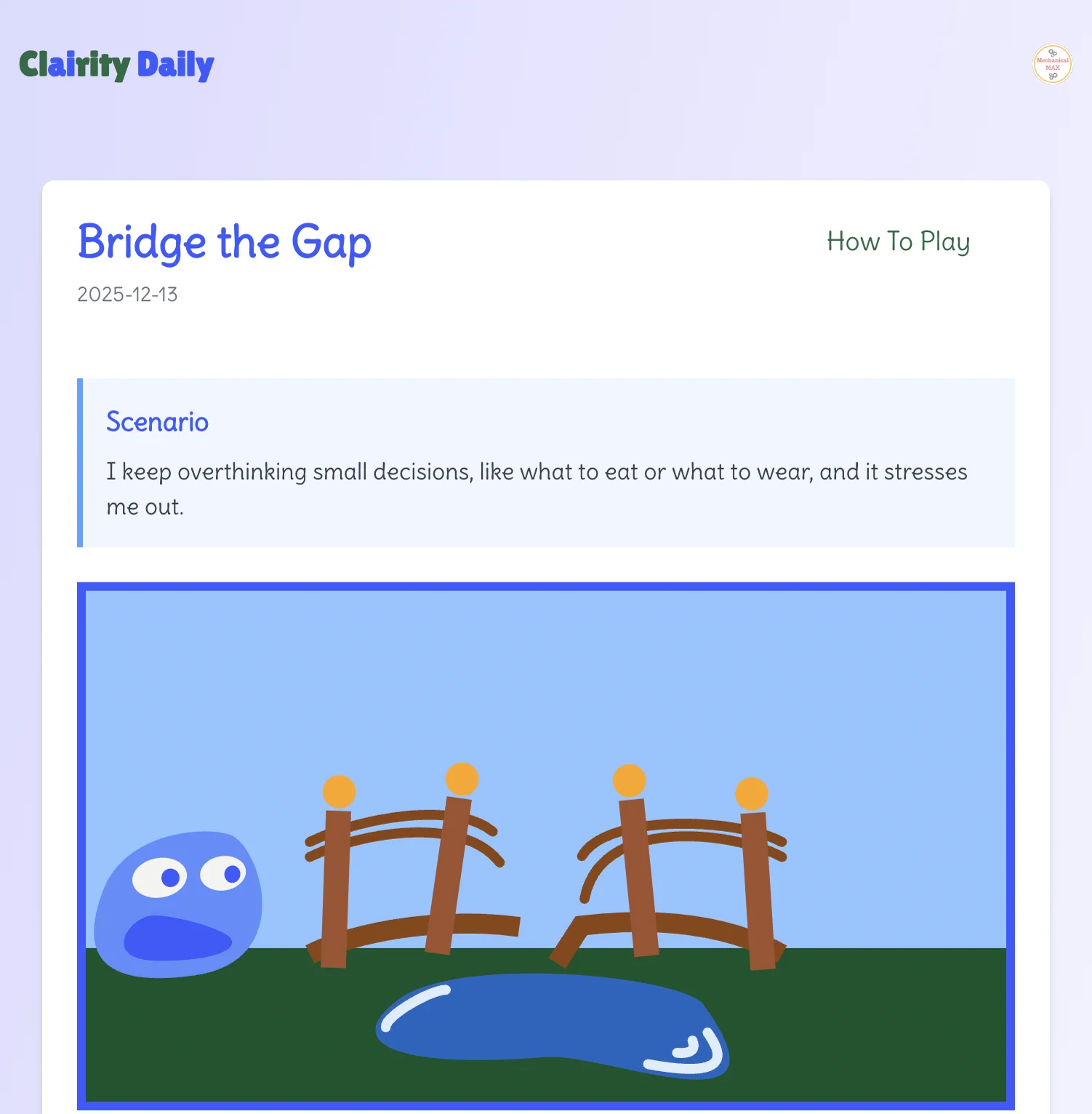
- Full-Stack Execution: I didn't just write the Next.js code. I designed the artwork, built the Supabase backend, set up the Vercel AI Gateway, and even hit the podcast circuit to promote it. I was in the arena every single day, turning a vision into a tangible reality.
How It Was Built
The stack was chosen for speed and production credibility — nothing experimental, everything integrated. See the full breakdown in ARCHITECTURE.md.
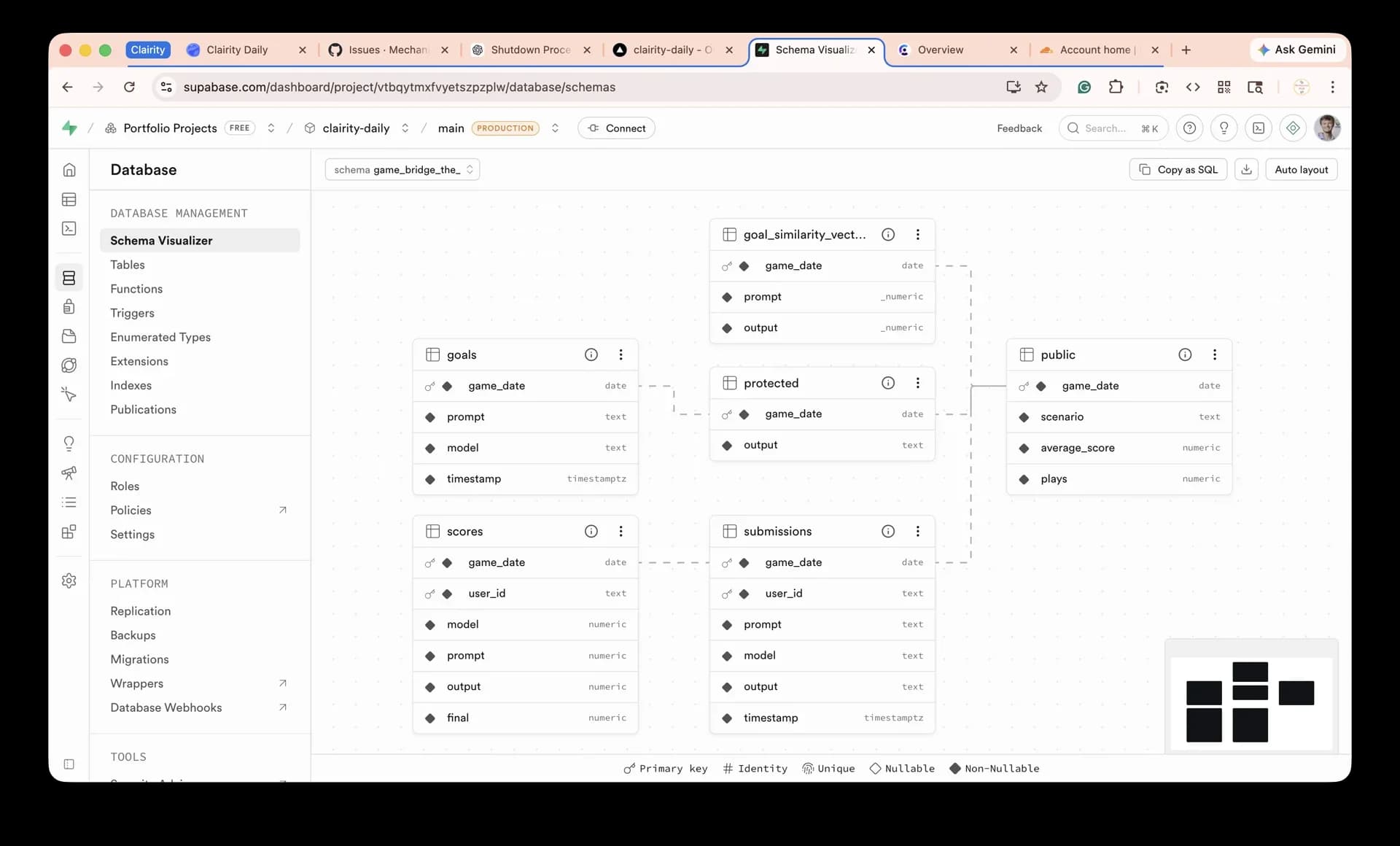
The architecture separated game data into five Supabase tables: public game metadata, a protected goal output, the goal prompt and model, pre-computed similarity vectors, and per-user submissions and scores. Clerk JWTs were wired directly into Supabase as the access token, with a separate admin client for privileged server-side operations.
Access was gated by date: today's game was free for any signed-in user, past games required a paid subscription enforced via Clerk's play_past_games feature flag.
The Outcome
The app works perfectly, but the real product was me.
-
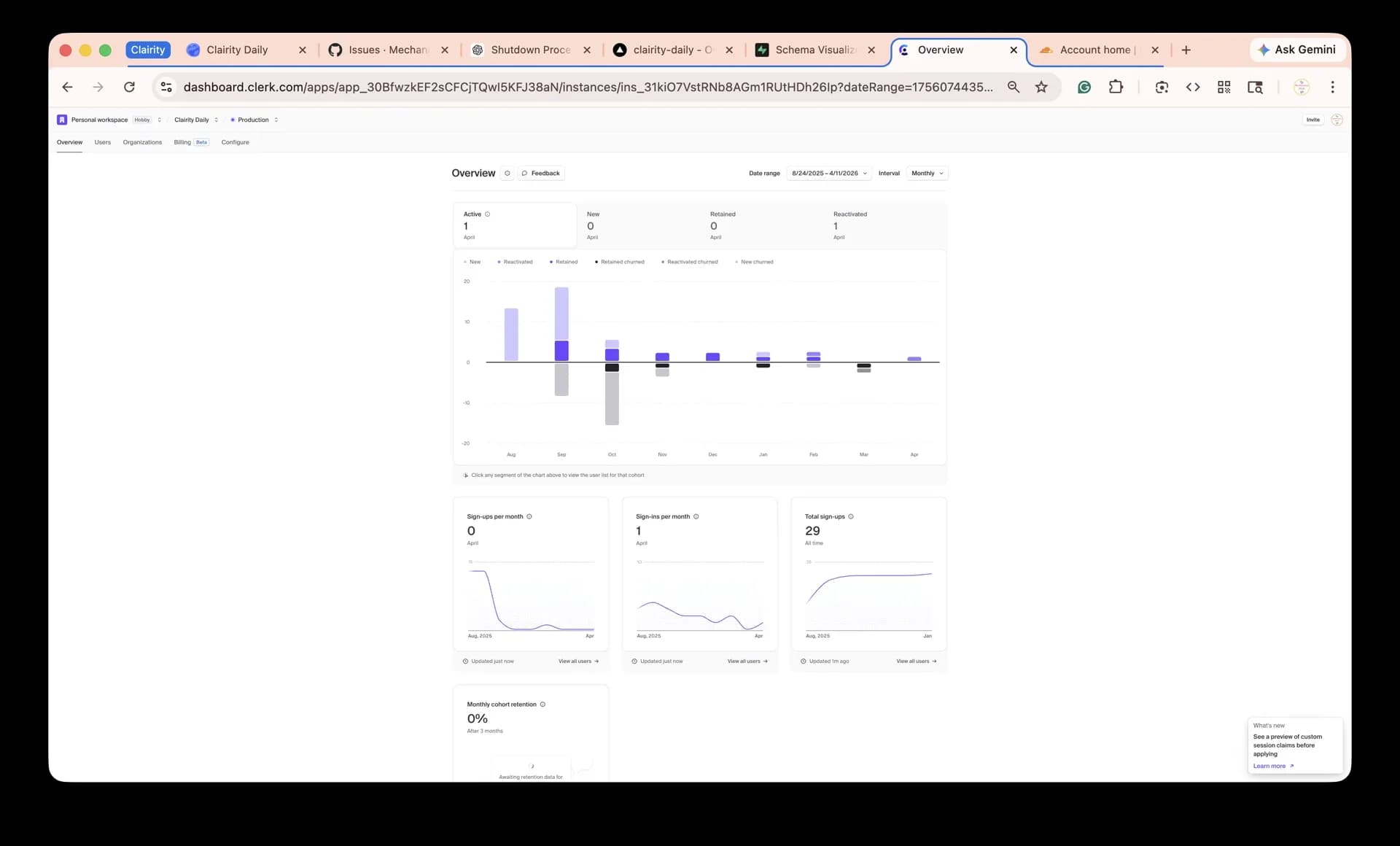
The Reality Check: While the code was clean and the design was slick, users didn't stick around. I learned the most valuable lesson of startups: Validate before you build. Passion is the fuel, but the market is the steering wheel.
-
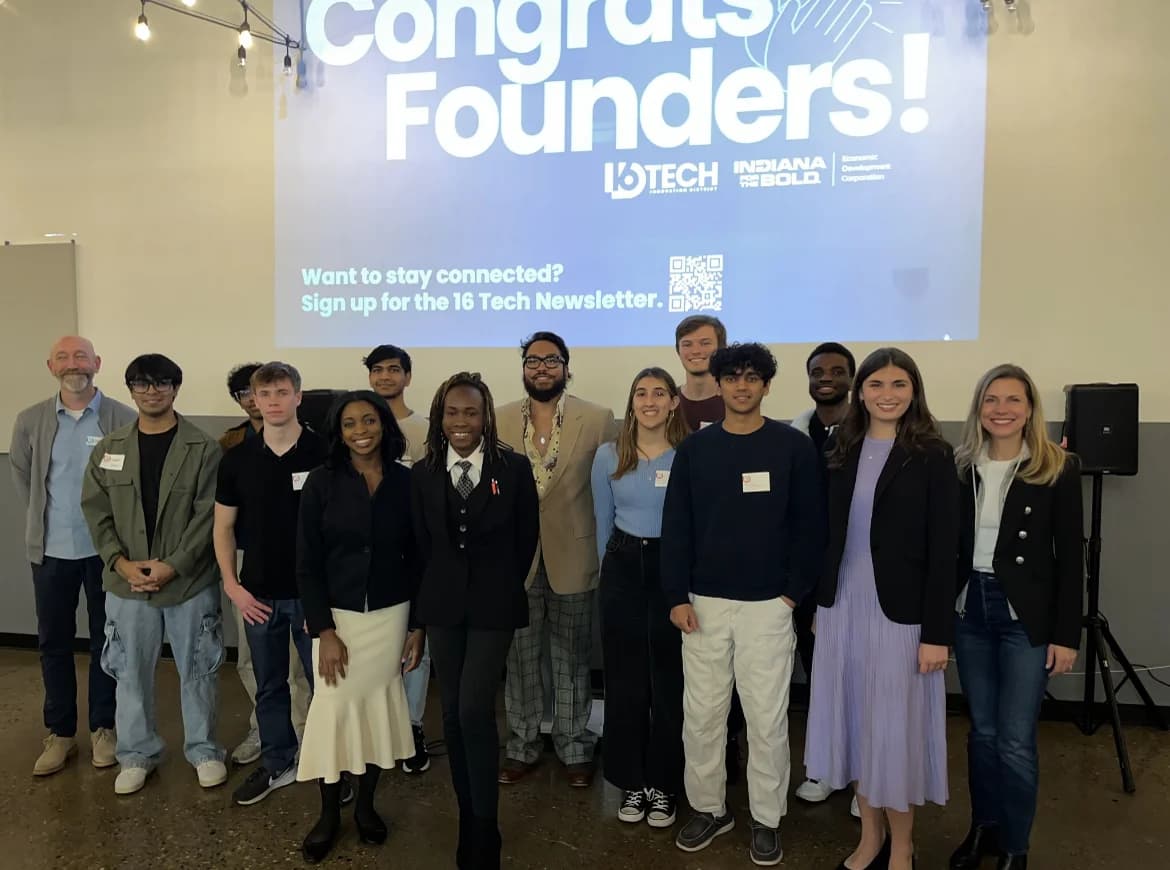
The Pivot to Partnership: This "successful failure" got me into Ignition, a competitive startup incubator at 16 Tech. There, I realized my true strength isn't just coming up with ideas—it's executing them.
-
A New Mission: I now use my technical velocity to help other founders build their dreams. I've realized that I'm happiest when I'm the technical partner who brings the visionary idea to life.
-
The "Why": Clairity Daily didn't become a unicorn, but it led me to a life I love. I now spend my days helping others create that sense of joy and wonder, ensuring they build scalable, value-driven products that actually make a difference.
What I Learned
Infrastructure should follow signal, not precede it. I built a stateful user system, persistent scoring, RLS policies, and an embedding pipeline before validating whether people wanted to come back the next day. A stateless prototype with no auth and no database could have tested the core game loop in a fraction of the time.
Separate "can I build this?" from "should this exist?" This project answered the first question definitively — yes, I can design, build, and deploy a full-stack AI product solo. But the second question requires earlier and more focused validation. I invested in infrastructure, UX polish, and system design before confirming daily retention or willingness to return.
A deliberate shutdown is a good outcome. Continuing would have meant deeper product validation, ongoing infrastructure maintenance, and a longer-term commitment without a clear signal. The highest-ROI decision was to archive the project, extract the lessons, and move forward. That's not failure — that's judgment.
Further Reading
The full technical breakdown and retrospective live in the GitHub repository:
- ARCHITECTURE.md — the complete system design, data models, game mechanics, and every integration decision
- RETROSPECTIVE.md — what worked, what didn't, and what this project opened up next