Product Strategy: The "Business Thinking"
The Challenge: Corporate R&D often trades velocity for perfection, leading to stalled initiatives. My role at Corteva wasn't just to "write code" or "design parts"—it was to bridge the gap between leadership's data needs and the scientists' physical reality.
The Strategy: Velocity through Modularity. I worked on three distinct projects that all shared a common solution: breaking complex, stalled problems into small, testable variables.
- Hardware: Prioritized laser cutting (rapid iteration) over 3D printing (slow fidelity) to prove physics concepts faster.
- Software: Chose Django because it integrated seamlessly with the existing team's Python skillset, ensuring the tools would live on after I left (Maintainability as a Feature).
The Problem
I was brought in to tackle three specific bottlenecks that were slowing down R&D operations:
- The 3-Year Blocker (Granule Dispersion Rig): A critical project to visualize fertilizer dissolution had been stalled for three years. Turbulence and lighting issues prevented clear data collection, and previous attempts failed by trying to solve everything at once.
- The "Data Silo" (Robotic Migration): Leadership was flying blind during a massive storage migration. The process was entirely paper-based (clipboards and calculators), meaning no real-time data existed to make decisions.
- The "Cost Barrier" (IoT Monitoring): The lab needed widespread temperature sensing, but commercial solutions were cost-prohibitive (~$800/unit) and rigid.
The Build
I acted as a full-stack technical partner, handling mechanical design, software architecture, and team culture.
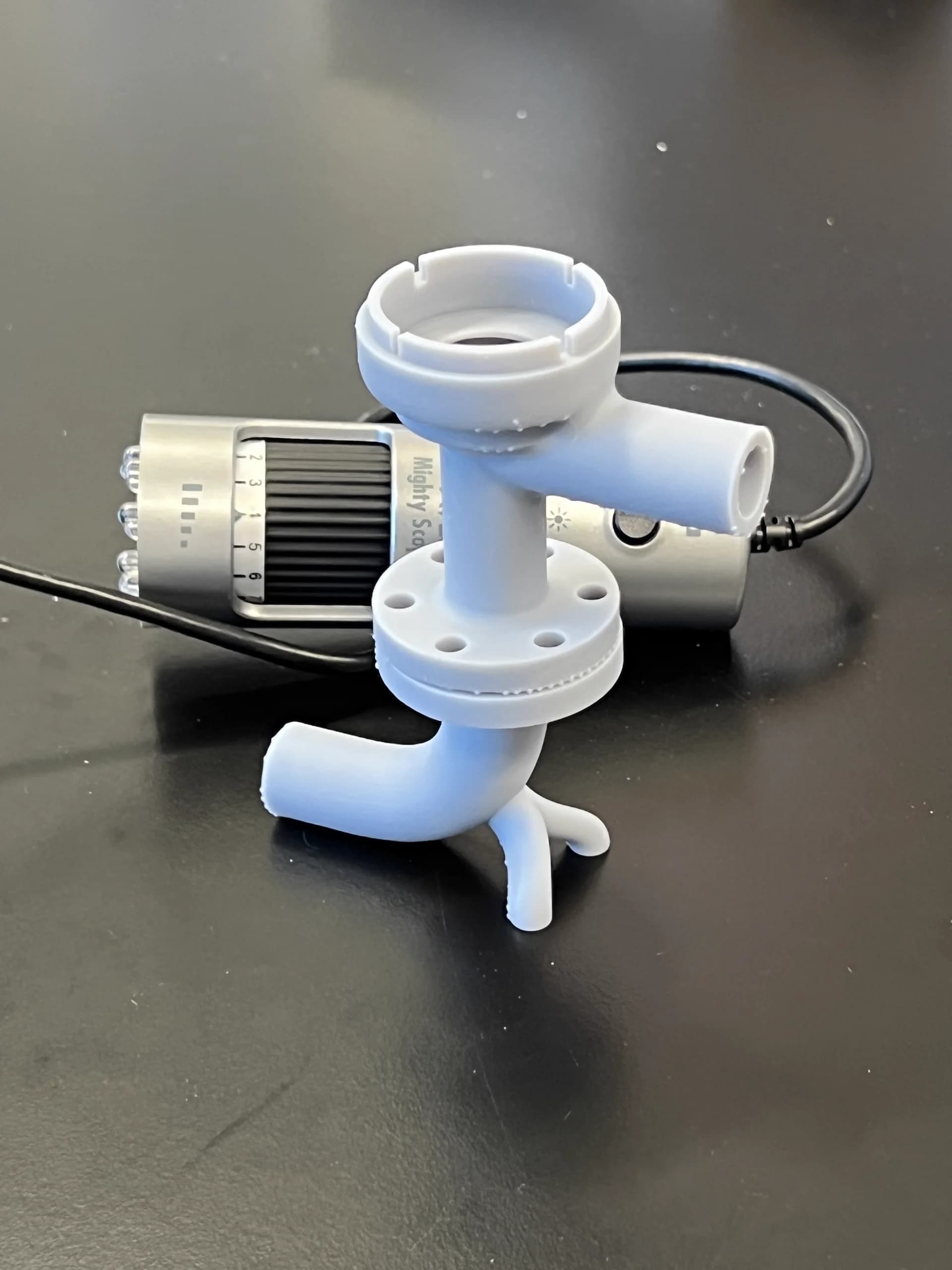
1. Cracking the "Stalled" Project I treated the rig as a physics problem first and a design problem second.
- Variable Isolation: We needed to validate flow physics before finalizing the enclosure.
- Rapid Iteration: I executed eight mechanical iterations using laser-cut plates. This allowed us to iterate daily rather than weekly, eventually creating a rig that stabilized the granule for perfect data capture.
2. The Data Historian (Django) I built a custom web app connected to an on-premise database to replace the clipboard workflow.
- Outcome: The app provided leadership with instant dashboards of migration progress without adding friction to the scientists' workflow.
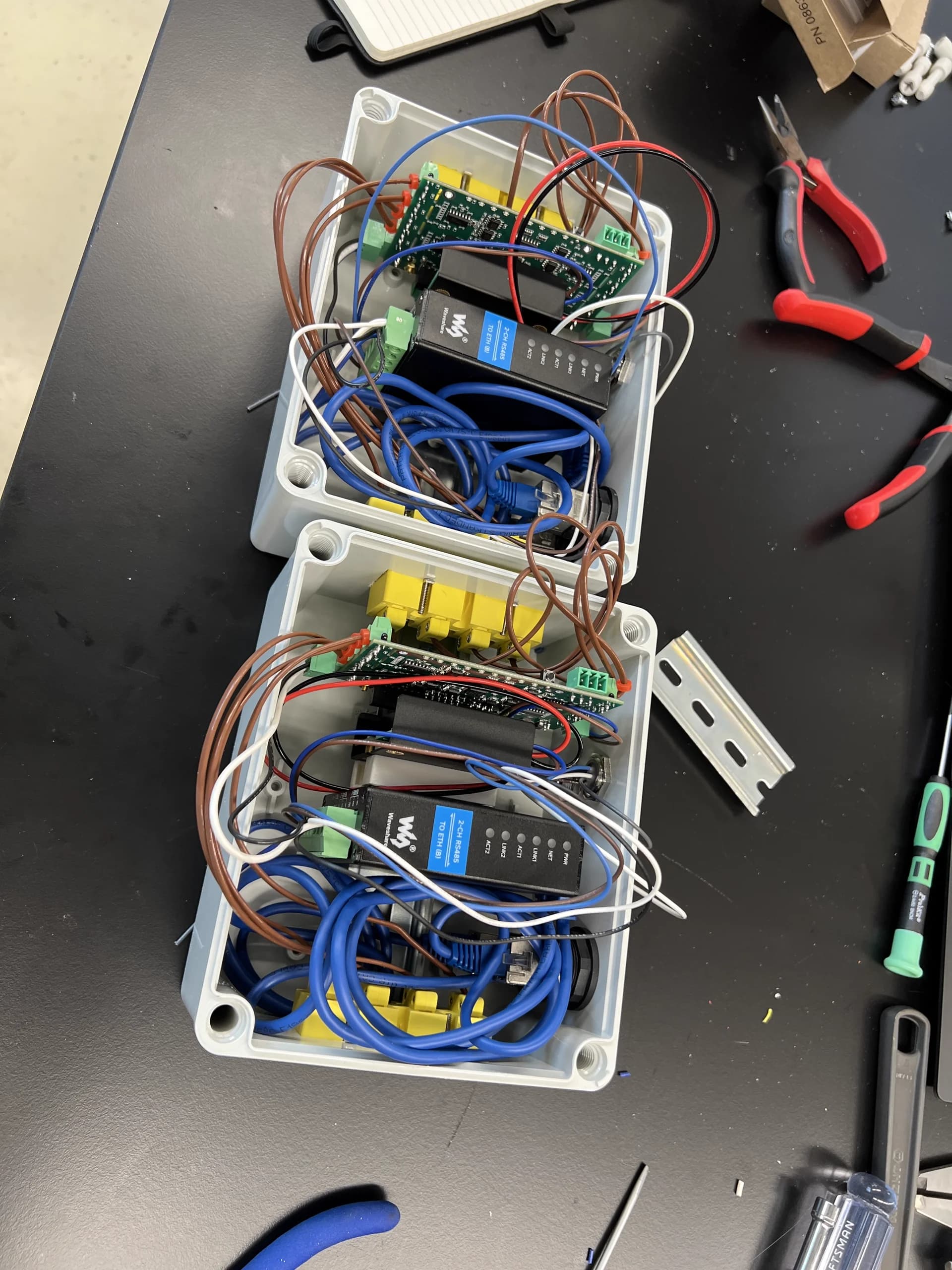
3. IoT Cost Engineering I engineered a custom sensor using a Raspberry Pi and thermocouples in a 3D-printed case.
- Firmware: I wrote the Python firmware to send data directly to internal servers, avoiding vendor lock-in.
- Economics: I drove the cost down to <$250 for 8 readings, compared to the commercial standard of ~$800 for 4 readings.
4. Culture & AI Operations I noticed gaps in the team's version control habits, so I ran lectures on modern Git collaboration.
- I also deployed custom AI agents to streamline documentation, turning tedious form-filling into a simple conversation with Copilot.
The Outcome
By applying a "startup mindset" to corporate R&D, we achieved significant operational improvements:
- Unblocked the 3-Year Stalled Project: Delivered the first working prototype for the granule dispersion rig, finally allowing scientists to record the dissolution process.
- 75% Cost Reduction: My custom IoT architecture slashed hardware costs while increasing data granularity.
- Operational Visibility: Transformed the robotic migration from a "black box" into a data-driven operation.
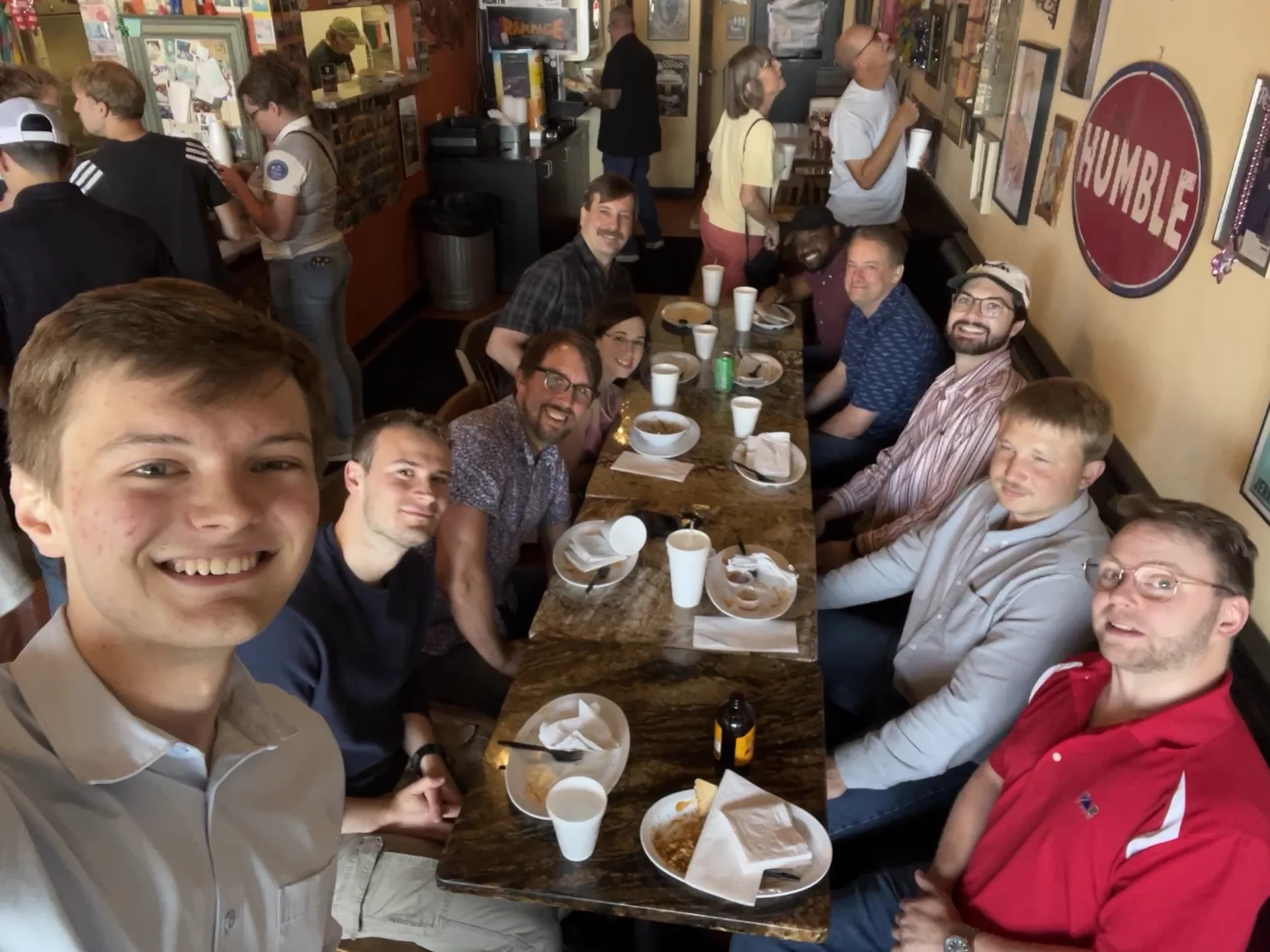
- Legacy: My work on Git and AI documentation modernized the team's workflow, leaving them faster than I found them.