Product Strategy: The "Business Thinking"
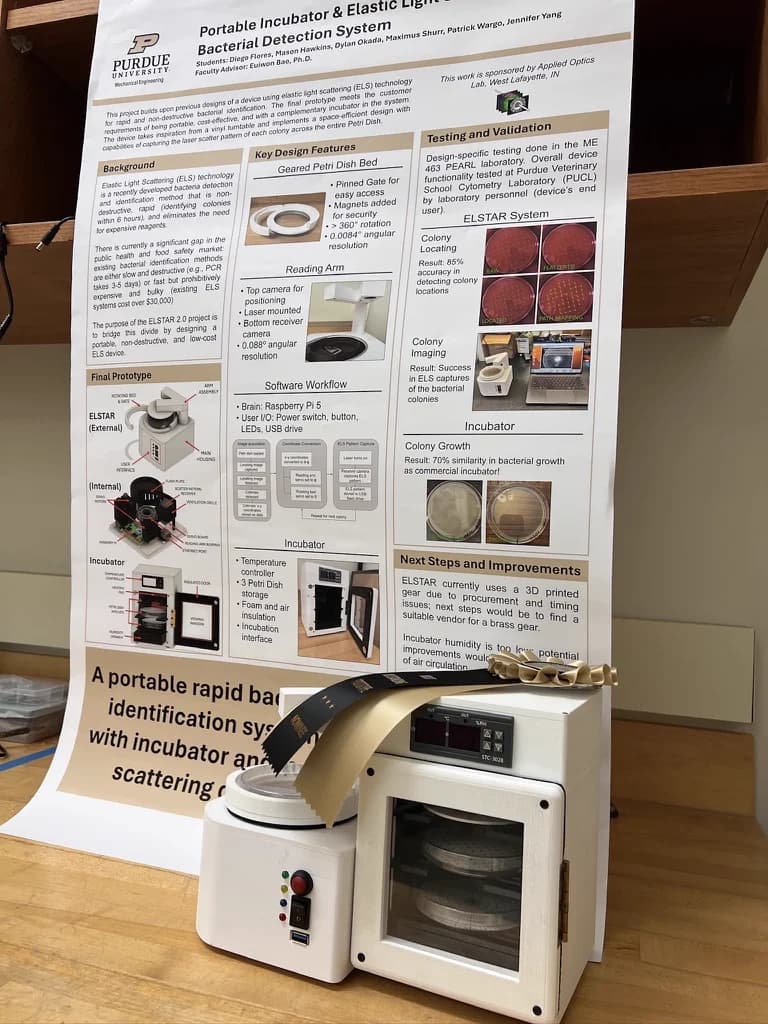
Great engineering isn't just about building complex systems; it's about solving the right problems for the right people. Existing bacterial identification methods were trapped in the lab—expensive, slow, and highly destructive. Our mandate was to build a non-destructive, highly portable Elastic Light Scattering (ELS) device for under $2,000.
But my biggest strategic challenge on this project wasn't writing the code; it was managing the friction between atoms and bits. As the lead software engineer on a team of six, I was responsible for the brains of the operation. Our project manager didn't write code, which meant I had to become the "translator." I learned how to effectively communicate technical timelines to non-technical stakeholders. Instead of just saying "the algorithm is hard," I learned to clearly explain why inverse kinematics takes time to debug, identify the exact bottlenecks, and outline how we could unblock our solutions to ship on time.
I stopped being just a coder and became a true Technical Partner—ensuring everyone knew exactly what had to happen to make the project work.
The Problem
- Current pathogen identification methods are costly and require bulky lab equipment, preventing rapid, on-site diagnostics.
- The hardware required extreme precision to hit microscopic targets, demanding a portable device that fit within a strict 6-inch cubic footprint and weighed less than 1.8 kg.
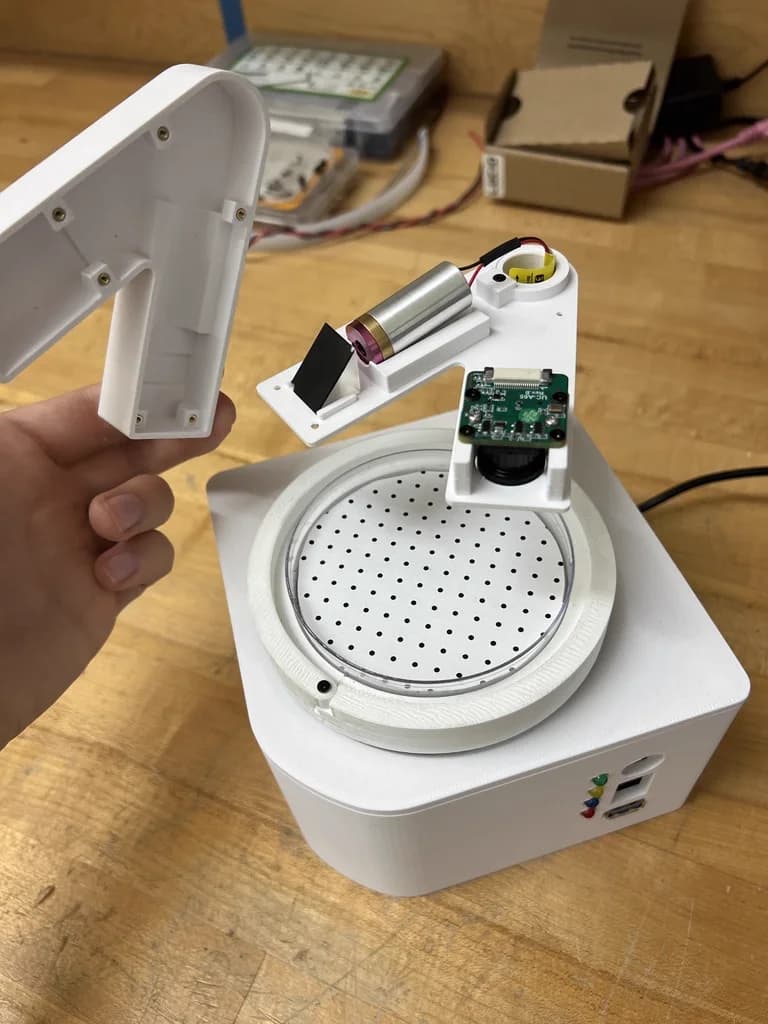
- The system needed to rapidly locate random bacterial colonies on an 88mm petri dish and perfectly align a laser over them using a complex mechanical "record player" style rotating bed and arm.
The Build
I was the lead software engineer, responsible for bringing the physical hardware to life through complex algorithms and hardware integration.
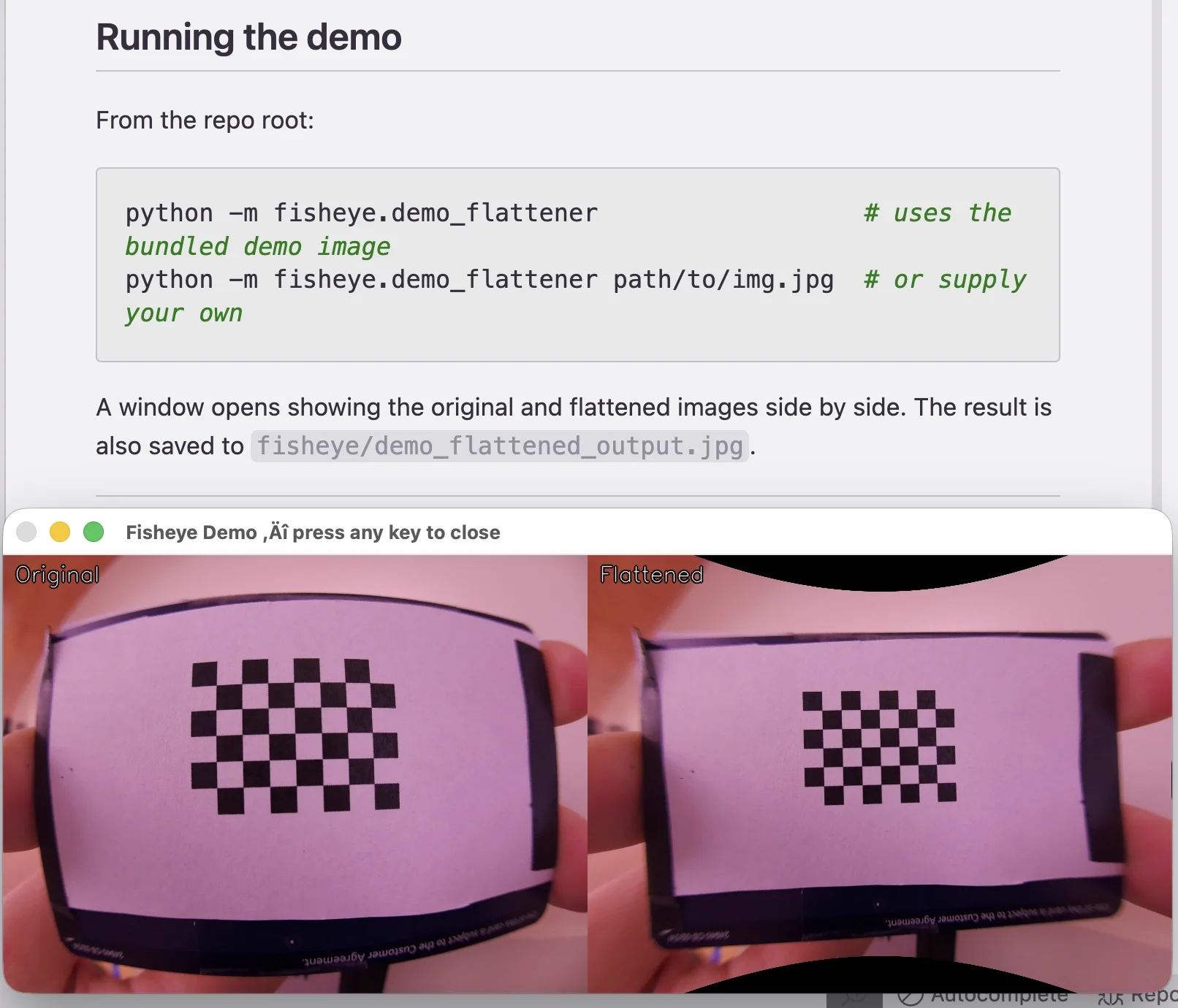
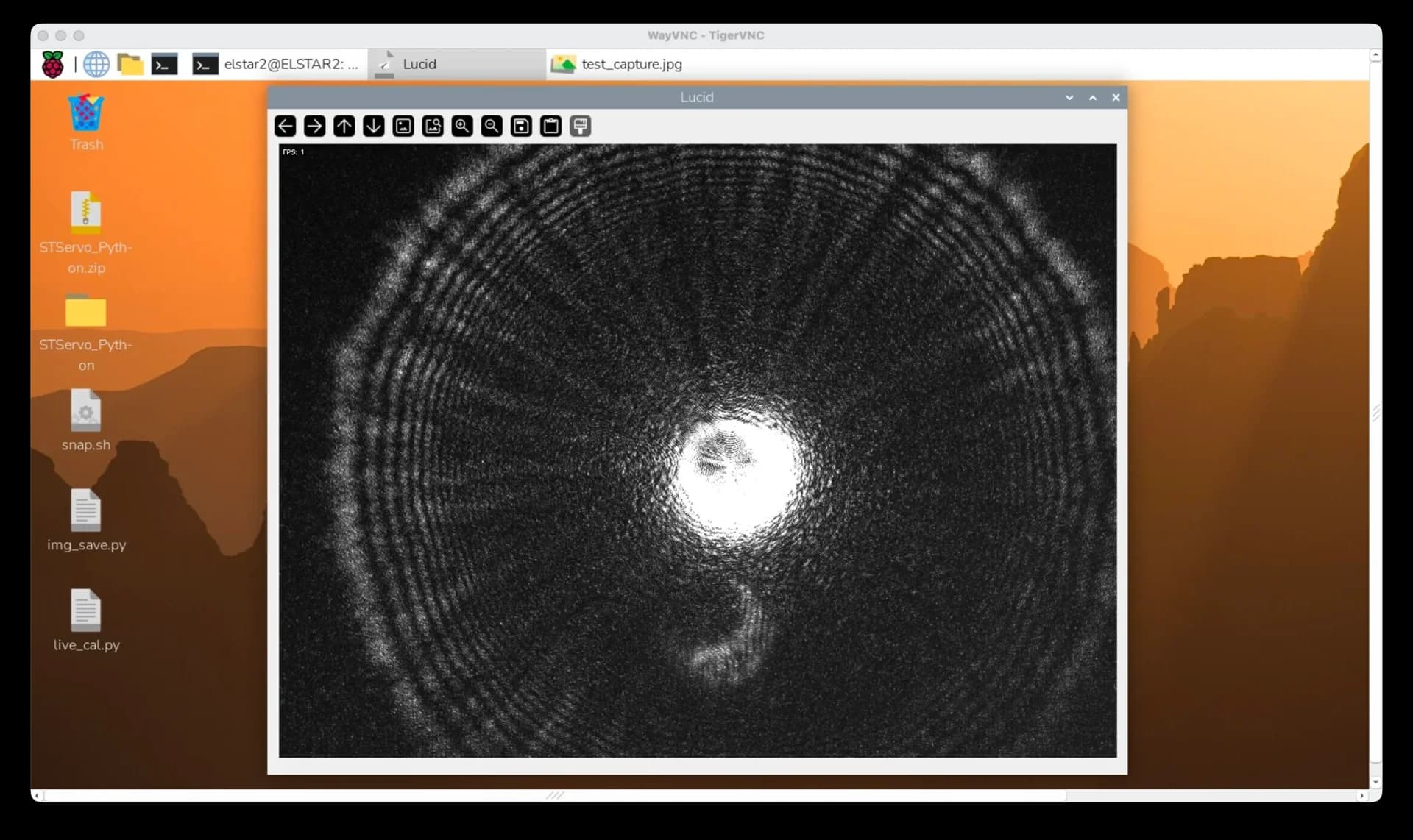
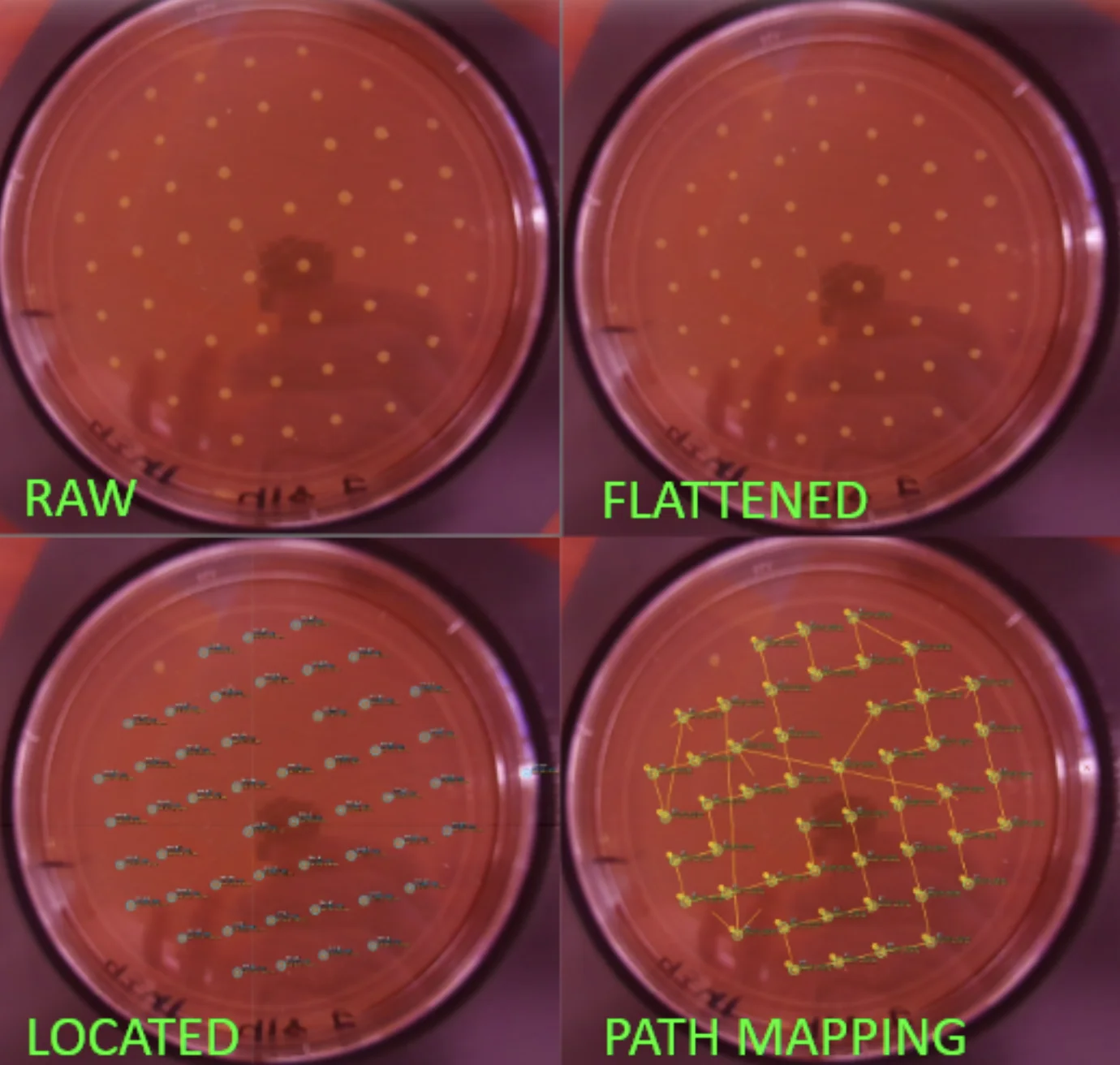
- Image Flattening: I implemented a camera calibration pipeline to normalize the raw images from our 105-degree FOV wide-angle lens, correcting severe optical bulging so the geometric data was usable.
- Computer Vision: I developed a blob detection algorithm using OpenCV contour analysis to scan the flattened image, identifying real bacterial colonies (like Kocuria) and extracting their exact x-y coordinates.
- Inverse Kinematics: I wrote the coordinate conversion algorithm to translate 2D (x-y) pixel coordinates into physical rotational angles (θ and ɸ). This allowed the Raspberry Pi to command the serial bus servos to perfectly align the laser payload over the bacteria.
- Resilience Under Fire: When a fried PCB and a dead Raspberry Pi threatened to derail our final integration days before the deadline, I adapted our codebase to work on legacy hardware we scavenged to keep the project alive.
The Outcome
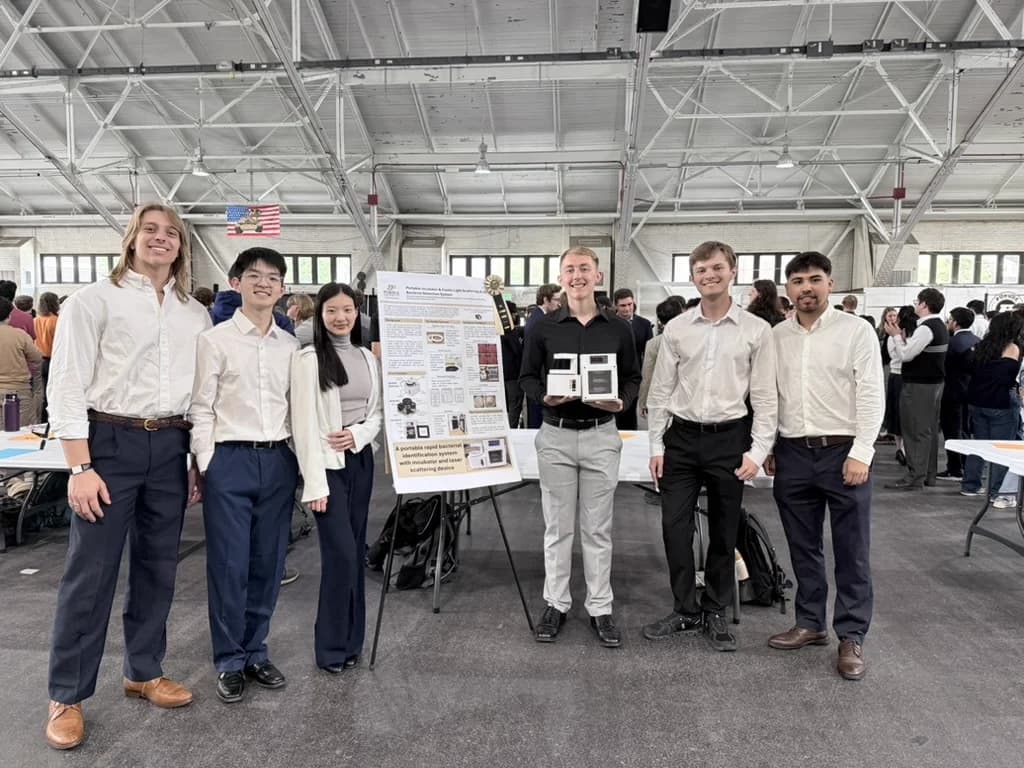
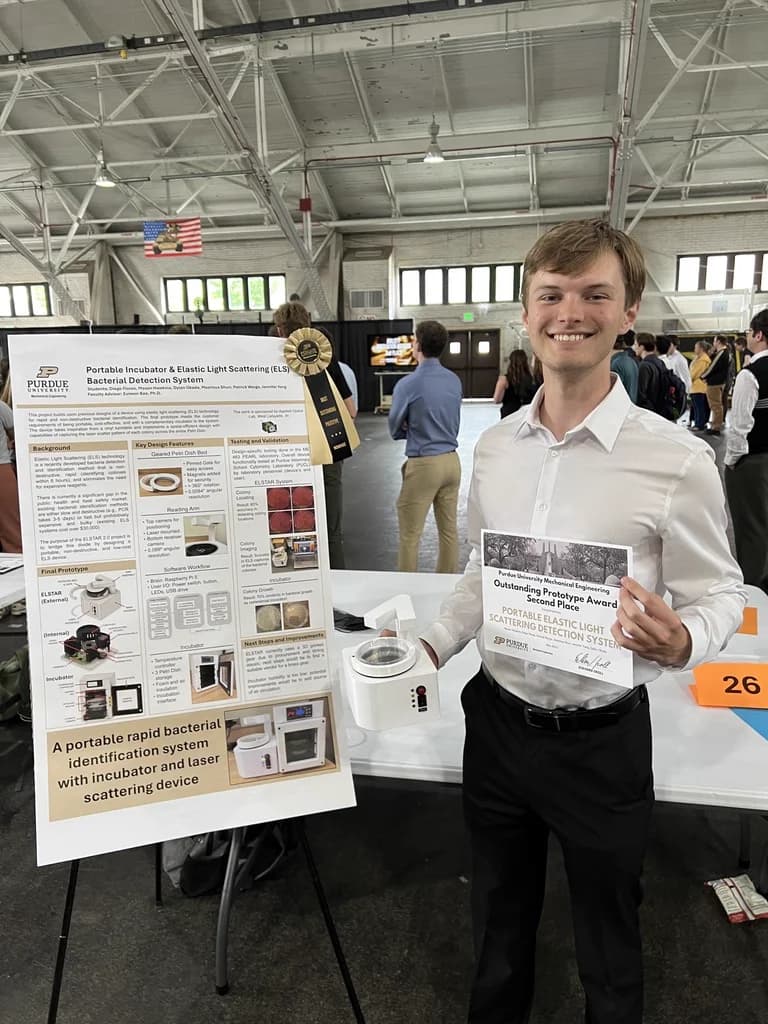
- Award-Winning: We won 2nd place out of 86 teams for the "Outstanding Prototype Award" in Purdue's Mechanical Engineering Senior Design.
- Proven Accuracy: Achieved an 85% success rate in dynamically locating real bacterial colonies using the vision algorithm.
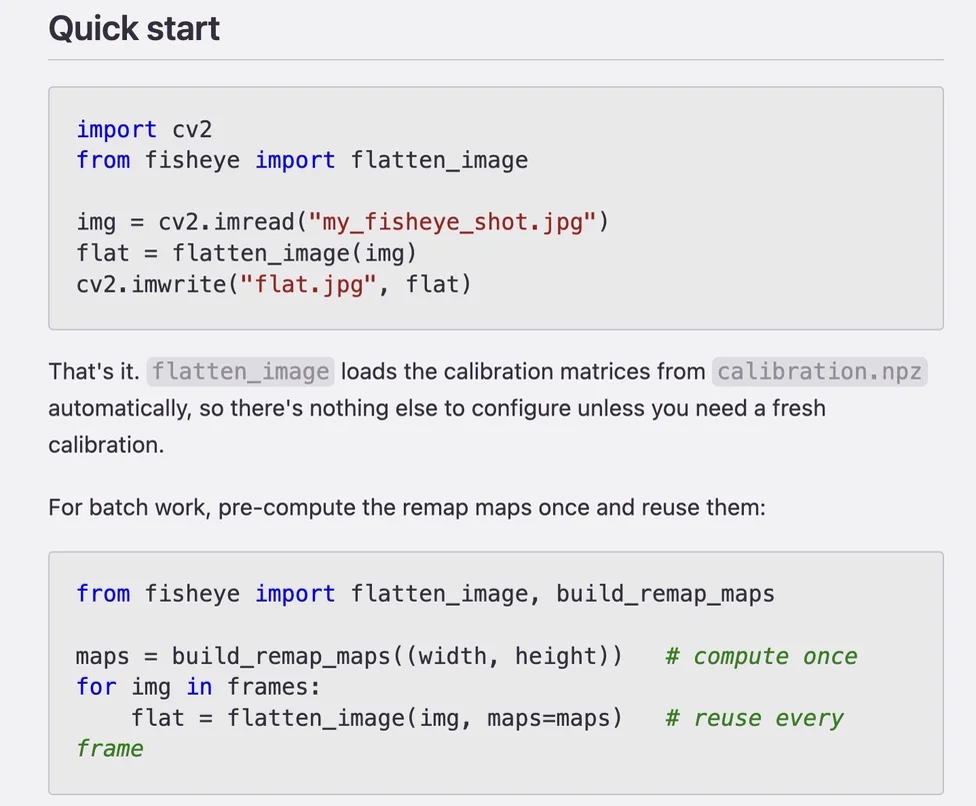
- Hardware Validation: Successfully captured microscopic ELS scatter patterns, validating the core functionality of the laser and CMOS sensor payload.
.webp&w=3840&q=75)
.webp&w=3840&q=75)
- Under Budget: Smashed our $2,000 budget constraint, delivering the final prototype and incubator system for roughly $1,780.
- The Real Lesson: I proved to myself that I can sit squarely between the physical constraints of mechanical engineering and the digital logic of software. I don't just write code; I bridge the gap to make machines move with purpose.